
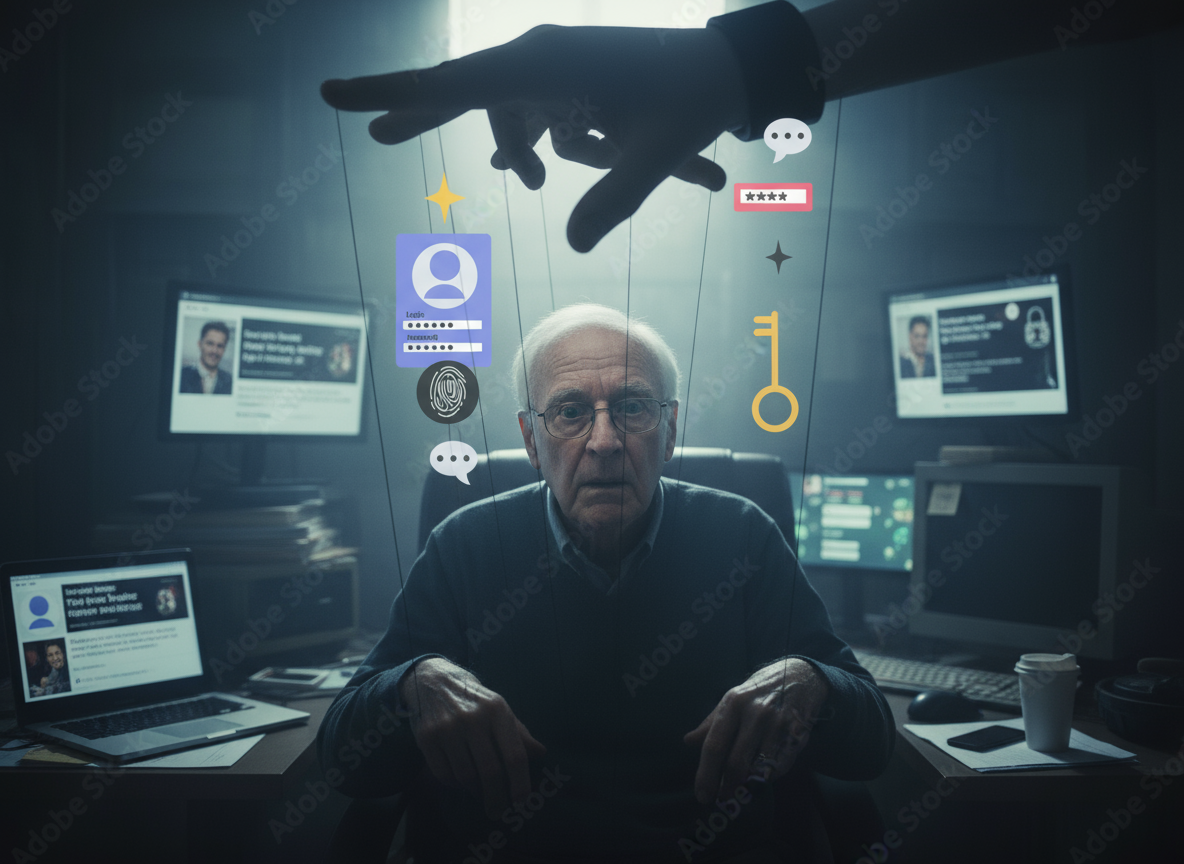
Scammers don’t hack computers — they hack people.
Social engineering means tricking you into trusting them so they can steal your money or information. They pretend to be someone real; a bank, utility, or government agency, and use fear or urgency to make you act fast.
If you feel pressured, it’s a scam. Hang up, delete the message, and verify it yourself.

Romance scammers create fake profiles on dating sites, social media, or even gaming platforms to establish relationships with their targets. They invest weeks or months building trust and emotional connection before the requests for money begin.
How it works: The scammer claims to be working overseas, in the military, on an oil rig, or traveling for business. They express deep feelings quickly and may talk about a future together. Eventually, a crisis emerges: they need money for a medical emergency, to pay customs fees on a package, to buy equipment for their business, or to purchase plane tickets to finally meet you in person.
Bitcoin becomes their payment method of choice because it's fast, works across borders, and is nearly impossible to reverse once sent.
Warning signs:
Protect yourself: Don't send money, Bitcoin, or gift cards to someone you've never met in person. Do a reverse image search of their photos to see if they're stolen from someone else's social media. Be skeptical of anyone who avoids video calls or constantly has excuses for why they can't meet. Talk to friends or family about the relationship — outside perspectives can spot red flags you might miss.
This scam targets older adults by impersonating a grandchild, niece, nephew, or other young relative in desperate trouble. The call often comes late at night to catch the victim off-guard and emotional.
How it works: You receive a frantic call from someone claiming to be your grandchild. They say they've been arrested, are in a car accident, or are stranded in another country. The voice might sound off, which they explain by saying they're crying, injured, or have a bad connection. They beg you not to tell their parents because they're embarrassed. Then comes the urgent plea: they need bail money, hospital fees, or lawyer payments immediately.
Often, a second person gets on the phone claiming to be a police officer, lawyer, or hospital administrator to add legitimacy. They insist on Bitcoin payment or wire transfer and warn that any delay could have serious consequences.
Warning signs:
Protect yourself: Hang up and call your grandchild directly at their known phone number. Reach out to their parents or other family members to verify the story. Remember that real emergencies allow time for verification — pressure to act immediately without checking is a classic scam tactic. Be especially cautious of late-night calls designed to catch you in a vulnerable, half-asleep state.
Scammers love cryptocurrency because:
If someone you've never met in person or a "relative" in crisis specifically asks for Bitcoin, that's a major red flag.
Victims of romance and family scams often experience intense shame, making them reluctant to report the crime or seek help. Remember: falling for these scams doesn't make you gullible or stupid. These criminals are professionals who study human psychology and know exactly how to manipulate emotions.
If you've been scammed:
If something feels off, it probably is. Real relationships don't come with urgent financial emergencies. Real emergencies allow time to verify the facts. And legitimate people don't insist on Bitcoin payments.
When in doubt, slow down, hang up, and verify independently. Your heart may want to believe, but your head can keep you safe.
Remember: Love shouldn't cost you thousands of dollars before you've even met in person.


Athena XP Partners
Pick the model that fits and answer a few questions. Our partnerships team will follow up within one to two business days.
Thank you. Someone from our partnerships team will be in touch within one to two business days.
In the meantime, here is the Athena XP brochure.
Thank you. Our team reviews every application and will be in touch if there is a match.