
How to Spot a Bitcoin ATM Scam Before You Feed the Machine
Scammers have a script. Here's every version of it, the…

Buy Bitcoin at an Athena ATM and the machine asks where you want your coins sent. That question is the whole point. Your Bitcoin lands in a wallet you control, on a network nobody owns, and from that moment forward it answers to you.
That arrangement has a name. Self custody.
Here’s the part that surprises people. Bitcoin lives on the blockchain, a public ledger copied across thousands of computers worldwide. Your wallet holds a private key, a long string of characters that proves you own a piece of that ledger and lets you spend it.
Think of the blockchain as a giant wall of safe deposit boxes anyone can look at. Your key opens exactly one of them.
Because a raw private key looks like alphabet soup, wallets translate it into a seed phrase: twelve or twenty four ordinary words in a specific order. Those words can rebuild your entire wallet on any device, anywhere on earth. Lose your phone in a lake and your Bitcoin is fine. Type those words into a new wallet app and everything comes back.
Which also means anyone who gets those words gets your coins. The seed phrase is the wallet. Everything else is just an app displaying it nicely.
When you leave coins on an exchange, the exchange holds the keys. You hold an IOU. That works right up until the platform freezes withdrawals or files for bankruptcy, and Bitcoin history has a graveyard of both. Mt. Gox customers waited a decade for partial repayment. FTX customers know the feeling.
You hold your keys, you hold your coins. When they sit in your own wallet, the only thing standing between you and your money is your own security habits. That’s the deal Bitcoin offered from page one of the whitepaper.
Every Athena ATM is built around this. We send coins directly to the wallet address you provide. We couldn’t freeze your Bitcoin after the fact if we wanted to, because we never hold it.
A hot wallet is any wallet on a device that touches the internet. The app on your phone is a hot wallet. So is a browser extension or desktop program.
Hot wallets shine at daily use. Scan a QR code at the ATM, receive coins in minutes, send money to family, pay a merchant. The keys sit on your phone, encrypted, ready when you are. Setup takes about five minutes and most good ones are free.
The internet connection that makes them convenient is also their weak spot. Malware, phishing links, fake wallet apps, and SIM swaps all hunt for keys on connected devices. That risk stays manageable at pocket money amounts. Your life savings deserve heavier armor.
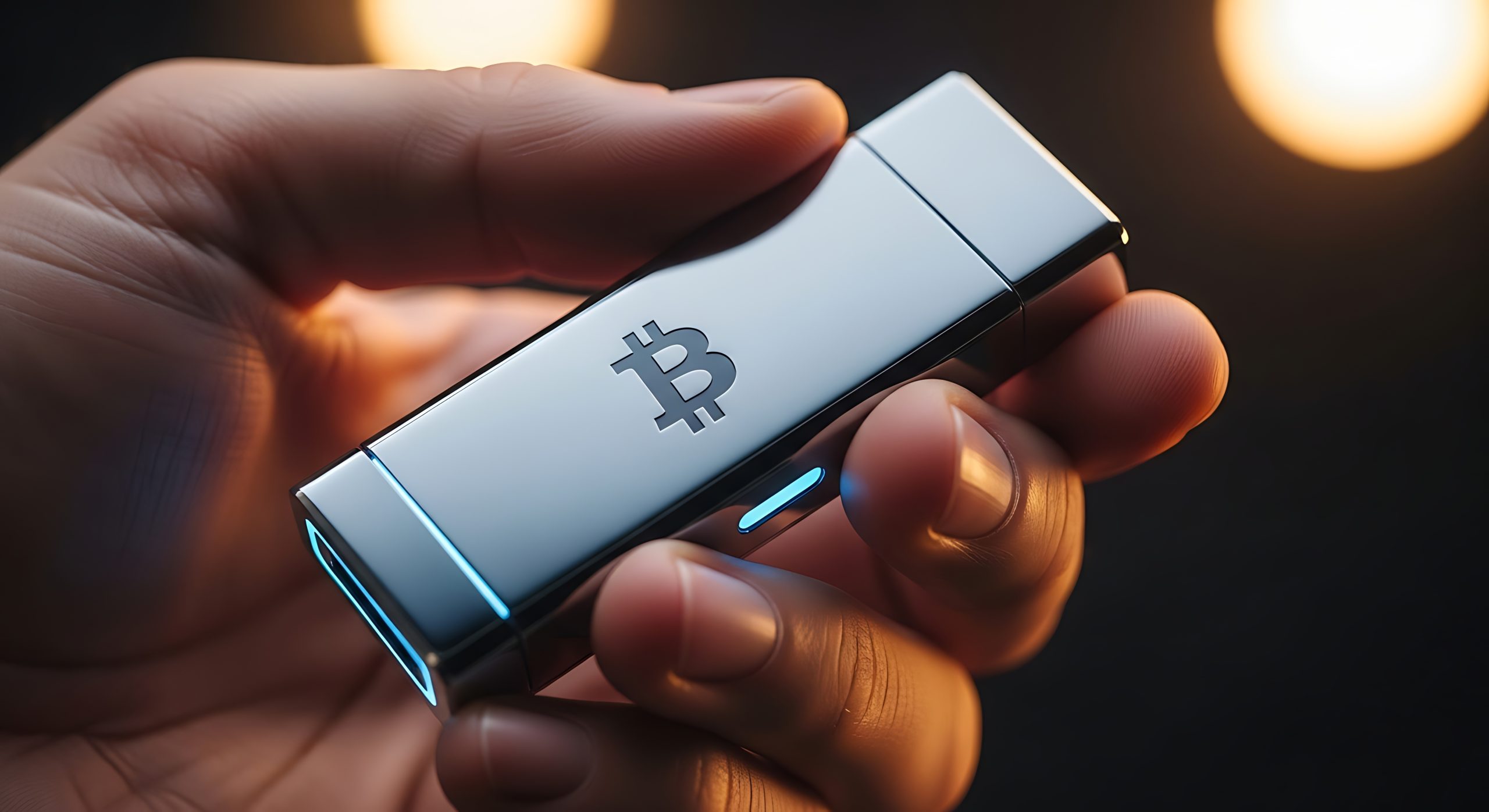
A cold wallet keeps keys on hardware that never connects to the internet. Usually that’s a small device that looks like a USB stick, made by companies like Trezor and Ledger. Transactions get signed inside the device itself, so your keys stay sealed off even when you plug into a compromised computer.
Hackers can’t reach what isn’t online. That’s the entire security model, and it works. A hardware wallet runs somewhere between fifty and two hundred dollars, which stops feeling expensive the day your holdings outgrow your phone.
Plenty of longtime Bitcoiners run both. Phone wallet for the coins they’ll spend this month, hardware wallet for the stack they’re keeping until retirement. Same logic as carrying a debit card while your savings sit somewhere harder to reach.
You don’t need the hardware device on day one. Download a reputable hot wallet, write down the seed phrase, buy a small amount at your nearest Athena ATM, and get comfortable sending and receiving. Graduate to cold storage as your stack grows.
Our wallet recommendations page lists the apps and devices we trust, and the step by step ATM guide walks you through your first purchase from the moment you walk up to the machine.
Own the future.




Athena XP Partners
Pick the model that fits and answer a few questions. Our partnerships team will follow up within one to two business days.
Thank you. Someone from our partnerships team will be in touch within one to two business days.
In the meantime, here is the Athena XP brochure.
Thank you. Our team reviews every application and will be in touch if there is a match.